Initially I thought I was having normal fever, and it did goes off after 1 day, however, the fever keeps on coming back. As you may know, fever is a body reaction where our body secretes a hormone to temporary increase body temperate so that our immune cells able to fight those bacteria and virus more effectively. As most bacteria and virus activities are low at higher temperature, thus a fever is a sign that your immune system is at work, fighting the intruders inside your body. A viral infection is a disease that can be caused by different kinds of viruses, of which the influenza-virus is best known. A viral infection can be in different places in the body, some viruses are mainly in the intestine, while others prefer the lungs and airways. With a viral infection you usually have a fever, but other complaints can range from abdominal pain and diarrhea to coughing and shortness of breath. The symptoms that I encountered was come-and-go fever and coughing, and shortness of breath. (more info read here: Viral Infection) Medication Prescribed by Doctor
Above were the 3 medication prescribed by doctor, I had summarised in the table below:
To read more about the above medication, please refer:
It is very clear that those medication prescribed by doctor has their side effects, and each of them may have more than one side effects. Imagine what will happen to my body if I taking these medications without second thought. Please read carefully the "Uses" column, each medication has their own purpose. However, there is one common thing that these medication shares, which is treat symptoms! Yes, all these medication can relieve my symptoms of coughing, fever, and stuffy nose, but there is one thing you must remember, the reason why you coughing is your lungs are trying to remove bacteria/viruses from respiratory system! The reason why you have stuffy nose is because the nasal mucus are actually trying to stop bacteria/viruses from entering your inner respiratory system.
Your body behave such because of its natural protecting feature, which protecting you from getting sick. And medication are actually trying to stop your body to do its jobs! Furthermore, taking medication will increase the burden of our liver and kidney as these two organs main features are detoxification. This is why I didn't take medication when I got viral infection.
How Our Immune System Combat Virus Attack?
Do you know that, our immune system is actually the best doctor in the world?
During the days where I was infected by viruses, I make sure that I consumed more Polysaccharides, as well as Antioxidant and Phytochemicals, these 3 nutrients are the fuel for stronger immunity, based on Nutritional Immunology.
Good morning
friends, I would like to share what I’d learned from the health talk organized
by National Cancer Centre Singapore, on 7th January 2017, about “Impact
of food, dietary supplements and physical activity on cancer management”,
shared by Ms Chang.
Based on study, the total number of cancer cases in Singapore does not
showing any sign of decreasing throughout the years.
Top three cancer cases for male are colorectal, lung and prostate
cancer.
While for the female, the top three cancer cases are breast, colorectal
and lung cancer.
150 minutes of exercise per week are recommended for everybody
regardless of your health.
From the study, it is clearly that dietary and food choices are
associated with our health.
The recommended daily diet composition are:
There are 52% of adults in the US are currently on supplements, however, there are no significant improvements in cancer treatments, and may actually increase mortality!
Alcohol intake is linked to the risk of some primary cancers:
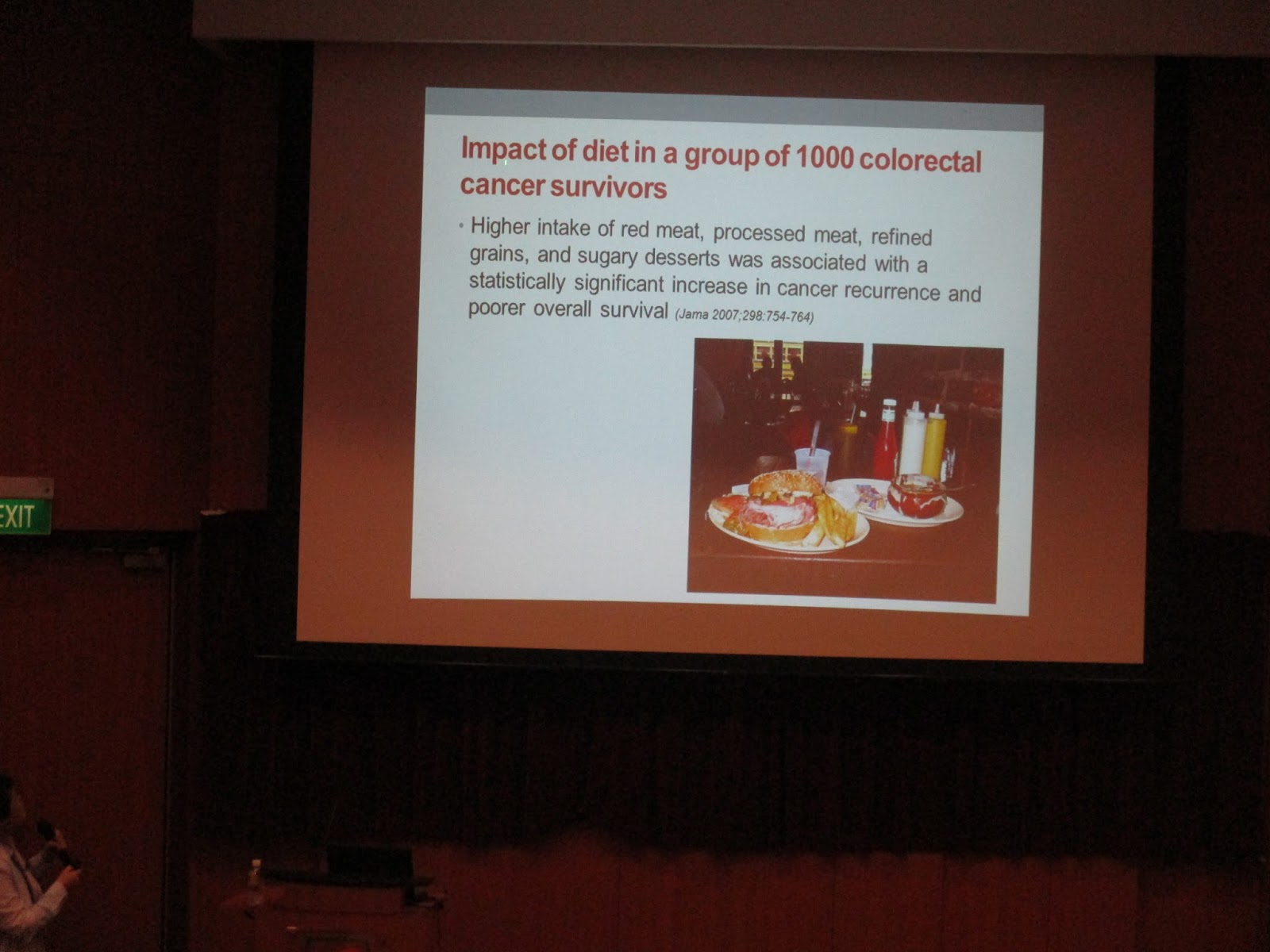
Red meat such as beef, mutton, pork, duck, and processed food has been link to cancer risk, especially colorectal cancer:
While reduction of red meat and processed meat could reduce the rick of colorectal cancer by 70%:
So, what's in actually inside of the red meat that causes it so harmful to our health?
Plastic has been related to hormone disruption:
From the study, increasing in fruits and vegetables intake will reduce the risk of getting cancer:
For full resolution of these photos and more photos about fats, cooking oil, Omega-3 and Omega-6, trans-fatty acid, processed food, etc, please click on the link below:
Do you know what there are cancerous cells inside each one of us, however, it is depends on our immune system to destroy these cancerous cells while it is still not life threatening! A healthy immune system is the key to a healthy life!
How can we keep our immune system healthy? Nutritional Immunologist has the answer for this question:
I just had a great sharing about <How To Safe Guard Your Health in Our Current Modern Lifestyle>, just before 2016 is over!
So happy that I was able to share the knowledge of Nutritional Immunology to so many new friends who came after work despite it was a raining evening.
Nutritional Immunology (NI) is a PREVENTIVE SCIENCE that studies the link between our diet and our immune system, which is the BEST DOCTOR in the world!
Dr Jau Fei Chen is the founder of NI, she been doing cancer research for more than 30 years, click here to listen her explaining NI --> Nutritional Immunology by Dr Jau Fei Chen
Thank you so much for the crews that made this happen!
If you want to know more about NI, please don't hesitate to contact Casper Teo at 8218 3033, or can email to casperteo.ct@gmail.com
Please stay tuned for the new sharing session on 2017! Happy holiday everyone!
Indeed our immune system is the best doctor in the world! Read more about our immune system by clicking here --> Understand Your Immune System
Now you have learn how our immune system works, how do we keep our immune system at its best condition? Scientists has discovered the key to keep our immune system healthy is by consuming plants foods which are high in antioxidant, phytochemical and polysaccharides. Read more by clicking here --> What is Nutritional Immunology?
What is Immune System?
The immune system is an amazing, proactive defense mechanism. Its complex network of white blood cells, antibodies and other immune chemicals and organs offers us around-the-clock protection against invaders. When there is a cut on the skin, the immune system works actively to heal it and stop the entry of microbes like viruses and bacteria. As our cells continuously reproduce, a strong immune system also helps to detect and defeat cell mutations that could lead to cancer.
Most diseases are the result of a malfunctioning immune system. The immune system may malfunction in one or both of the following ways:
A Weak Immune System
You may have come across someone who constantly gets sick – be it with flu, a cough, cold or even stomach discomfort. Have you ever wondered why some people recover quickly while others take longer or just never fully recover? The answer lies in our immune system.
The air we breathe, the food we eat and the surfaces we touch are always teeming with disease-causing dust, pollutants, fungi, parasites and germs like viruses and bacteria. Once our body is weak, these toxic agents will easily overwhelm the immune system and cause illnesses.
Acquired Immune Deficiency Syndrome (AIDS) is one example of a disease linked with a weak immune system. Once AIDS sets in, the immune system is critically compromised and unable to effectively combat dangerous germs. Cancer is also a sign that our immune system is weak. Chemotherapy, a type of radiation treatment for cancer, further weakens the immune system – this is why cancer patients are easily afflicted with flu, coughs and colds.
A Hyperactive Immune System
The immune system can be also malfunction by over-reacting of turning against the body’s own cells. This often leads to allergies or autoimmune diseases.
An allergic reaction, such as a respiratory allergy, skin allergy or food allergy, occurs when the immune system reacts against non-threatening agents, such as plant pollen, animal fur, dust and some types of food.
An autoimmune disease occurs when our immune system mistakenly attacks our body’s own healthy cells. Rheumatoid arthritis, multiple sclerosis, psoriasis, diabetes mellitus and systemic lupus erythematosus are all examples of common autoimmune diseases.
Doctor treats allergies and autoimmune diseases by prescribing drugs to suppress the immune response. Such treatment usually results in a weakened immune system, thus, leaving us more susceptible to diseases. And usually, such drugs only stop the symptoms, such as swelling or pain. They do not completely cure the disease. In addition, medications result in a wide array of harmful side effects. Immune Organs
The first line of defence – skin: When invaders are sighted, Langerhans cells sound the warning bell. Antibacterial substances within our sweat and sebum trap bacteria while tears and mucus membranes secrete enzymes to break down the invader’s cell wall.
Soldier Factory – Bone Marrow: Bone marrow creates red blood cells and white blood cells, the soldiers of the immune system. Every second, about 8 million blood cells die and the same number are regenerated here.
Training Ground – The Thymus: Just as soldiers train for war through the navy, infantry and air force, the thymus assigns T cells their duties in fighting illnesses. The thymus also secretes immune-regulating hormones.
Battlegrounds – The Lymph Nodes: Lymph nodes are little pockets of battlegrounds with billions of white blood cells. When fighting infections, lymph nodes swell with foreign invaders and immune cells to the point where you can actually feel them. Swollen lymph nodes are a good indication that you have an infection and your immune system is hard at work. As the army’s drainage system, lymph nodes filter the lymph fluid, which carries away waste products like viruses and bacteria. The body contains about four times more lymph than blood.
Blood Filter – The Spleen: The spleen is a blood reservoir. It filters the blood by removing dead blood cells as well as engulfed viruses and bacteria. It also activates B cells to produce large amounts of antibodies.
Throat Guard – The Tonsils: The tonsils maintain constant vigilance against invaders that gain access to the body through the nose and mouth. People who have had their tonsils removed show a marked increase in getting Strep throat and Hodgkin’s disease – indicating the importance og the tonsils in upper respiratory tract protection.
Immune Assistant – The Appendix: The appendix assists with B cell maturation and antibody (IgA) production. It also acts like a traffic coordinator, producing molecules that direct the movement of white blood cells to other parts of the body. The appendix also exposes white blood cells to the invaders present in the digestive tract and helps suppress potentially harmful antibody response while promoting local immunity.
Intestinal Guards – Peyer’s Patches: Like the appendix, Peyer’s patches react to invaders in the intestines. They are vital to the control of microbial invaders in our food.
Immune Cells
Specific Fighters – B Cells & Antibodies: B cells provide humeral immunity – protection via antibodies circulating in our bodily fluids like serum and the lymph. B cells are soldiers who fight invaders by producing antibodies specific to them. Antibodies, also known as immunoglobulins, are our enemy-seeking missiles. They track and lock onto assigned invaders before triggering immune responses to destroy the invaders. Some B cells become “memory” cells. So, if the same invader attacks again, they are quickly identified and antibodies are immediately produced to fight against them.
Non-Specific Fighters – T Cells: T cells give the body cellular immunity. They provide non-specific immunity by seeking and destroying enemies regardless of type. Helper T cells are the commanders of the immune system. They rouse and issue orders to other soldiers through chemical messengers. Cytotoxic T cells and NK cells are lethal snipers who shoot holes into invaders. Once the infection is controlled, suppressor T cells regulate antibody production and call an end to the war.
Enemy Eaters – Phagocytes & Granulocytes: Phagocytes, such as monocytes and macrophage, are large cell eaters that engulf and digest the enemy. Macrophages are multitasking immune cells. Apart from cleansing the body of debris and aged blood cells, they also secrete chemicals to bring other immune cells to where the invasion is taking place. Granulocytes, like neutrophils, eosinophils and basophils, destroy invaders through potent chemical granules. For example, pus from a serious infection contains dead neutrophils and other war debris.
Some people catch colds frequently and recover slowly. Others do not fall sick when surrounded by ill people and they recover quickly form the flu. The difference is in their immune system.
Research has revealed that humans can live meaningfully for at least 120 years, and with appropriate care and wholesome nutrition, living for 150 years is possible. However, the average lifespan is currently only around 70 to 80 years. In 2010, 8 million people died of cancer, and 17 million died of heart disease; the 1918 Spanish flu killed 40 to 50 million; in 2003, SARS took over 1,000 lives. Such alarming statistics should alert us to address the root of the problem, and achieve longevity through prevention.
Nothing comes close to a healthy immune system in defending us from disease-causing agents. So how do we keep the immune system in tip-top condition?
A seemingly healthy outward appearance is no indication of how healthy we really are inside. Diseases have a way of sneaking up on us. Infections could be lurking deep within with the only hints being slight tiredness or a persistent sniffle. Before we know it, we could fall seriously ill but by then, it would be too late for prevention. Therefore, we need to stay vigilant by nourishing our immune system daily with generous servings of the right nutrients.
Ever since antibiotics were discovered, humans have been focusing more on treatment and less on prevention. We have forgotten to take advantage of the amazing preventive and healing powers of the immune system. Nutritional Immunology is a relatively new science that emphasizes prevention over cure. This science focuses on the explicit link between proper nutrition and the health of the immune system.
The Best Doctor – The Immune System
Advancement of medicine lags behind disease development. Treatment can only begin with the appearance of symptoms, and has its limitations. Fortunately, the best doctor, the immune system, is within the body. This doctor is like a sophisticated army, always on alert to protect the body against foreign invaders.
Things we encounter, the air we breathe and the food we eat may appear clean, but are full of pollutants. A small slip-up by the immune system may allow pollutants to trespass via the skin, eyes, nose and mouth, while a fully functioning immune system can easily destroy such invaders.
Influenza causes 200,000 to 500,000 deaths every year. Among those infected, some recovered and some died. The difference is due to the immune system.
A weak immune system makes the body vulnerable to attack by microbes and infectious diseases such as SARS, pneumonia, meningitis, hepatitis, flu and tuberculosis. It can even lead to cancer.
A hyperactive or malfunctioning immune system can result in allergies or autoimmune diseases. An allergic response occurs when the immune system reacts against non-threatening agents such as dust, plant pollen and animal dander.
An autoimmune disease occurs when the immune system mistakenly attacks the body’s own cells or tissues. Examples of autoimmune disease include rheumatoid arthritis, multiple sclerosis, lupus, diabetes mellitus and psoriasis.
Can medication replace immune system function?
Immune system function involves countless cells, chemicals and organs working closely together. Medications perform only specific functions such as stimulating or suppressing the immune system, and may lead to side effects, unsettling immune system balance and even leading to more diseases.
Immune system balance is the result of a healthy lifestyle:
A balanced diet: Eat mainly a variety of plant foods and reduce meat intake.
Positive and stable emotions: Stress stimulates the body to secrete corticosteroid, which suppresses immune system function, increasing risk of cancer, flu and other disease.
Adequate rest and exercise: Sleep enables the immune system to repair and regenerate. Exercise makes the body perspire, letting it purge toxins, and improves lymph circulation. If regular exercise is not possible, frequent deep breathing can help to encourage lymph circulation.
A healthy lifestyle enables us to live healthier, longer lives.
The True Health with Plant Foods
Nutrition for the immune system comes from plant foods, not animal-derived food.
Plant foods contain plant nutrients such as phytochemicals, antioxidants and polysaccharides that have been proven to prevent and defend against cancer and other diseases.
Phytochemicals
Phytochemicals can prevent the various stages of cancer formation.
Phytochemicals are unique to plant foods. They can effectively prevent diseases, nourish the immune system, accelerate recovery from diseases and can halt and reverse stages of cancer development.
Every plant has its own unique variety of photochemical, which are nutrients not found in meat. For example, cauliflower contains indoles, sulforaphane and flavonoids. They can lower risk of diseases such as breast and ovarian cancer, and can encourage molecules with cleansing abilities to interact with carcinogens for a detoxifying effect. Soy is another example. It contains isoflavones including genistein, daidzein and glycitein. Isoflavones can lower serum cholesterol levels, reduce risk of coronary heart disease, relieve menopausal symptoms, suppress cancer cell growth and lower risk of osteoporosis.
Antioxidants
Antioxidants can slow down aging.
Antioxidants are chemicals that can prevent cell damage by suppressing oxidative effects of free radicals, which are highly unstable molecules. Oxidation alters normal oxygen molecules to become free radicals. They can be produced via smoking, exposure to toxic chemicals, excessive sun exposure and metabolic processes such as digestion.
Free radicals are highly unstable and destructive. They can easily alter proteins, cell membranes, and DNA. Over time, such irreparable damage causes cancer and other degenerative diseases such as cataracts and heart disease.
Grape seed is high in antioxidants, particularly oligomeric proanthocyanidin (OPC). With 20 times more antioxidant activity than vitamin C and 50 times more antioxidant activity that vitamin E, it can protect cells from oxidative DNA damage, and boost health and skin’s youthfulness.
Rose is also rich in antioxidants. Besides 50 times the vitamin C in lemon, it contains niacin, flavonoid, and vitamins A, B1, B2, B3, E and K. It aids DNA damage prevention, wound healing, increase of macrophage activity, and improvement of skin tissue and appearance.
Polysaccharides
Polysaccharides can boost immunity, encourage natural killer cell growth and defend against tumors.
Polysaccharides are long chain of sugars. Research has shown that they can inhibit tumor growth by activating immune cells.
Polysaccharides help to balance the immune system and encourage the production of NK cells, interferons and interleukins, promoting the immune system’s destruction of cancer cells and viruses.
Research has shown that mushrooms are rich in polysaccharides, and different mushrooms have different polysaccharides. ABM mushroom, Yun Zhi mushroom, Shitake mushroom, Maitake mushroom and Reishi mushroom are particularly effective in resisting tumors and viruses. They can speed up recovery from cancer and relieve side effects of chemotherapy.
Eating a variety of mushrooms is more beneficial than eating a single type of mushroom, and consuming a concentrated extract of polysaccharides is more beneficial than consuming dried mushroom powder. In addition, only a suitable amount and combination of polysaccharides will produce optimal results.
Wholesomeness is Best!
Wholesome plant foods are Nature’s miracles. Till today, their abundant nutrients have not been entirely discovered by scientists.
Advantages of Plant Foods Over Animal-derived Food
Plant foods contain phytochemicals, antioxidants and polysaccharides that can boost immune function. Plants also contain fiber that is lacking in meat, dairy products and other animal-derived food. Fiber is non-caloric and helps to regulate blood sugar, reduce blood cholesterol levels, lower risk of coronary heart disease, aid bowel movement, decrease risk of cancer in the digestive system and aid weight management. Plant foods also contain plant protein that is easily absorbed, does not easily trigger allergies and does not lead to calcium loss.
Compared to animal-derived food, plant foods do not contain animal hormones and are more eco-friendly. In 2009, Worldwatch Institute (WWI) reported that livestock produce 51% of greenhouse gases, with 1.5 billion livestock producing more waste gases than all transport vehicles in the world combined, contributing to the greenhouse effect. Methane, produced by livestock in large amounts, is 72 times as strong as carbon dioxide as a greenhouse gas over a period of 20 years. In addition, rearing livestock uses large amounts of resources, taking up around 70% of farmland worldwide. The Food and Agriculture Organization of the United Nations estimated that during 1961-2001, more than 60% of grain was fed to livestock. 2400 gallons of water is needed to produce one pound of meat, while one pound of wheat requires only 25 gallons of water. Hence, replacing animal-derived food with plant foods is not only healthy for the immune system, but also contributes towards saving the environment.
Hidden Dangers of Vitamin Pills
Many people think that they can make up for imbalanced diets due to busy lifestyles by taking vitamin pills. However, there are risks of vitamin pill overdose. Researchers from Copenhagen University Hospital analyzed data from trials involving 233, 000 participants, and found that beta-carotene, vitamin A and vitamin E intake doubles the risk of hip fracture. A large-scale eight-year study by the Swedish government revealed that beta-carotene pills might increase lung cancer risk in male smokers. Researchers at Keio University in Japan found that vitamin E overdose leads to increased osteoporosis risk. An American Heart Association report of a follow-up study on 132, 000 participants pointed out that excessive vitamin D intake can lead to a rapid heart rate or arrhythmia. Research from Johns Hopkins University has shown that vitamin A overdose increase liver and lung cancer risk, and may lead to fetal deformities and lower bone density.
Wholesome Plant Foods for Perfect Nutrition
According to the Academy of Nutrition and Dietetics and the U.S. National Academy of Sciences, the best way to obtain vitamins is through consuming beneficial, wholesome foods. They also emphasize that vitamin pills cannot replace a well-balanced diet.
Wholesome plant foods contain perfect combinations of nutrients. They are Nature’s greatest gifts, and cannot be replaced with man-made vitamin pills.
Let's watch a short video about how our immune system function:
Dr. Jau-Fei Chen obtained her PhD in microbiology from Brigham Young University, USA, specializing in immunology and biochemistry along the way. She focused on cancer research for more than 20 years.
In 1992, Dr. Chen received the Federation of Overseas Chinese Associations' Outstanding Overseas Youth Award. In 1993, she was awarded the annual Model of Overseas Chinese Youth Entrepreneurs Award.
In 1996, she was named Outstanding Woman of the Year by the Chinese Women's Association of America. Governor Pete Wilson declared march 8, 1996, to be Jau-Fei Chen Day in the state of California.
In 1997, Dr. Chen was named one of the Ten Outstanding Young Americans by the U.S. Junior Chamber of Commerce. She was the first person of Chinese descent to win the TOYA award in that field. She also received the China Dynasty Award in the same year.
Through the years, Dr. Chen's passion for educating about Nutritional Immunology has taken her around the world. She also published many books, including Enjoying Health & Longevity with Nutritional Immunology and Cancer & Nutritional Immunology.
Let's watch a short video about Introduction of Nutritional Immunology by Dr Jau-Fei Chen.